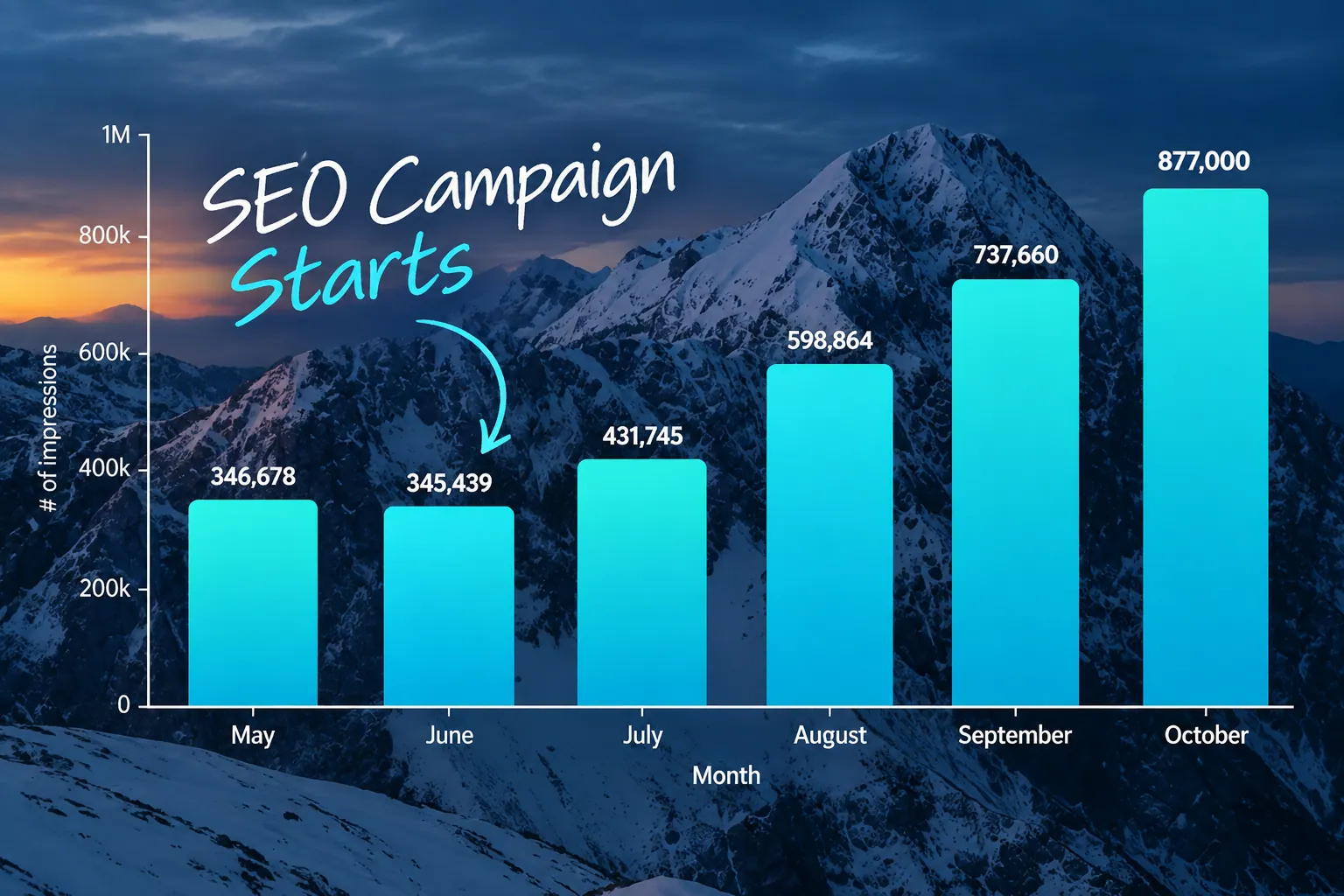
A SaaS SEO agency helps a software company turn organic search into trials, demos and qualified pipeline, not just traffic. That distinction matters because software buyers research for weeks or months, compare several vendors, read documentation before they talk to sales, and increasingly ask AI assistants for shortlists. Generic SEO playbooks built for local businesses or ecommerce stores rarely fit that journey.
Good SaaS SEO services combine three disciplines. The first is content marketing that maps to every stage of the buying journey, from the first time a buyer notices a problem to the moment they compare you against an incumbent. The second is technical SEO for marketing sites that are often built on JavaScript frameworks, split across subdomains, and full of templated pages. The third is measurement that ties organic sessions to sign-ups, product-qualified leads and revenue.
This guide explains how B2B SaaS SEO works in practice, what a strong agency should deliver, how programmatic pages can help or hurt you, which KPIs matter, what the work typically costs, and the questions to ask before you sign a contract.
What a SaaS SEO agency does differently from a general SEO firm
A general SEO firm usually optimizes for rankings and sessions. A SaaS SEO agency optimizes for the business model: recurring revenue, free trials or freemium sign-ups, sales-assisted demos, expansion inside existing accounts, and churn reduction through better help content. The keyword strategy, page types and reporting all follow from that.
- Keyword research is organized by funnel stage and buyer role, not just by search volume. A query with 50 monthly searches from buyers comparing your category can be worth more than a 20,000 search informational term.
- Page types go beyond blog posts: comparison pages, alternatives pages, integration pages, use-case pages, industry pages, templates, free tools and documentation all play a role.
- The agency works closely with product marketing, because positioning, pricing and feature claims must be accurate and consistent.
- Technical work covers rendering, crawl budget for large templated sections, subdomain and subfolder decisions, and the handoff between the marketing site and the app.
- Reporting connects organic landing pages to trials, demos, product-qualified leads and closed revenue, ideally through your CRM and product analytics.
Mapping B2B SaaS SEO to the software buying funnel
The most useful way to plan B2B SaaS SEO is to map content to what the buyer knows at each stage. Each stage has different keywords, different intent and a different call to action. A healthy program covers all of them rather than publishing dozens of top-of-funnel articles that never convert.
- Problem-aware content. The buyer feels the pain but has not named a solution. Queries look like how to reduce customer churn, why month-end close takes so long, or how to track contractor hours. Content here teaches, frames the problem in a way your product solves, and offers a soft next step such as a template or newsletter.
- Solution-aware content. The buyer knows a category of software exists. Queries include best project management software for agencies, what is a customer data platform, or employee scheduling software. These pages explain the category, evaluation criteria and where your product fits.
- Comparison and alternatives pages. The buyer is choosing between named vendors. Queries include your product vs a competitor, competitor alternatives, and cheaper alternative to a known tool. These are often the highest converting pages on a SaaS site and deserve honest, specific, well-maintained content.
- Integration pages. The buyer wants to know whether your product works with the tools they already use, such as Salesforce, HubSpot, Slack, Shopify or QuickBooks. A dedicated page per meaningful integration that explains what syncs, which plans include it and how setup works captures very qualified searches.
- Use-case and industry pages. The buyer searches for software for a specific job or vertical, such as invoicing software for freelancers or scheduling software for dental clinics. These pages prove fit with workflows, examples and screenshots.
- Templates and free tools. Calculators, generators, checklists and downloadable templates attract searchers with a concrete task and introduce them to the product with very low friction.
- Documentation and help center. Existing customers and late-stage evaluators search for setup and how-to questions. Indexable, well-structured docs reduce support load, help retention and often rank for long-tail product queries your competitors ignore.
A good agency will audit which of these page types you already have, where competitors are winning, and which gaps sit closest to revenue. Usually that means fixing and expanding bottom-of-funnel pages first, then building middle and top-of-funnel content that links down to them.
Product-led content: writing that shows the software doing the work
Product-led content solves the reader's problem using your product as the natural tool, without turning the article into a sales page. A guide on building a sales commission plan, for example, can walk through the logic with real formulas and then show how the same plan is set up in your software, with screenshots or a short embedded walkthrough.
This approach works for SaaS because it answers the query fully, demonstrates value, and gives the reader a reason to start a trial at the exact moment they understand the problem. It also creates content competitors cannot easily copy, because it depends on your actual product, data model and workflows.
- Start with a real job the buyer is trying to complete, not a keyword alone.
- Explain the method in a way that is useful even if the reader never buys.
- Show the product step at the point where it saves the most time or reduces the most risk.
- Use original screenshots, sample data and specific settings rather than stock images.
- Keep product details current. Outdated screenshots and retired features damage trust and conversion.
- Close with a relevant call to action, such as a template preloaded in the product or a demo focused on that use case.
Programmatic SEO for SaaS: scale without thin content
Programmatic SEO means generating many pages from a template and a dataset, for example one page per integration, per industry, per city, per currency pair, or per job title. SaaS companies are well suited to this because they often hold structured data that genuinely varies from page to page. Done well, it can capture thousands of long-tail queries. Done poorly, it creates a large section of near-duplicate pages that search engines may crawl rarely, index partially, or treat as low value.
Google's guidance on scaled content is clear in spirit: producing many pages primarily to manipulate rankings, with little added value for users, is a problem whether the pages are written by people, by templates or by AI. The test is whether each page would still be useful if search engines did not exist.
- Each page needs unique, meaningful data or content, not just a swapped keyword in the H1 and title.
- Start with a small batch, check indexing and engagement in Google Search Console, and expand only when the pattern works.
- Do not publish pages for combinations nobody searches for or that you cannot serve well.
- Build internal linking through hub pages so crawlers can reach the set, and keep the XML sitemap accurate.
- Set clear rules for noindexing or consolidating pages that underperform, rather than leaving thousands of weak URLs live.
- Review a sample of pages by hand on every release, because template bugs replicate across the entire set.
Technical SEO for JavaScript-rendered SaaS marketing sites
Many SaaS marketing sites are built with React, Next.js, Vue, Nuxt, Gatsby, Webflow or a headless CMS. These can rank very well, but the setup matters. Google can render JavaScript, yet rendering adds a step, other crawlers and many AI systems may not execute scripts at all, and client-side only rendering can leave important content or links invisible in the initial HTML.
- Rendering. Prefer server-side rendering or static generation for marketing pages so titles, headings, body copy, canonical tags and internal links exist in the raw HTML.
- Links. Use real anchor elements with href attributes for navigation. Click handlers on buttons or divs are not reliable links for crawlers.
- Metadata. Make sure each route outputs its own title, meta description, canonical and structured data on the server, not after hydration.
- Subdomains and subfolders. Blogs, docs and help centers are often spread across separate subdomains and platforms. Hosting them in subfolders is not mandatory, but it simplifies internal linking, analytics and governance. Whatever the structure, link the properties together and keep navigation consistent.
- App and marketing separation. Keep logged-in app URLs, staging environments and preview deployments out of the index with authentication or noindex, and avoid leaking app routes into sitemaps.
- Performance. Heavy scripts, chat widgets, tag managers and video embeds can push Core Web Vitals out of the good range. Google's thresholds are LCP within 2.5 seconds, INP within 200 milliseconds and CLS of 0.1 or less.
- Faceted and parameter URLs. Changelogs, template galleries and integration directories with filters can create many crawlable variations. Control them with canonicals, sensible linking and parameter handling.
An experienced SaaS SEO agency will crawl the site both with and without JavaScript rendering, compare what appears, and give your developers specific, prioritized tickets rather than a generic audit export.
SaaS SEO KPIs: trials, demos and product-qualified leads
Traffic and rankings are leading indicators, not outcomes. The KPIs a SaaS SEO program should report on depend on your go-to-market motion, but they almost always include conversion events that matter to revenue.
- Free trial or freemium sign-ups from organic search, by landing page and page type.
- Demo requests and sales-qualified meetings attributed to organic sessions.
- Product-qualified leads, meaning accounts that reached an activation milestone inside the product, such as inviting teammates or connecting an integration.
- Activation and paid conversion rate of organic sign-ups compared with other channels, so you know whether SEO brings good-fit users.
- Pipeline and closed revenue influenced by organic, pulled from your CRM.
- Non-branded organic visibility for priority bottom-of-funnel keywords, plus share of comparison and alternatives queries.
- Documentation and help center traffic, along with support ticket deflection if your support team tracks it.
Agree on these definitions before work starts. If marketing, sales and product each define a qualified lead differently, SEO reporting will always be disputed.
Attribution with long B2B sales cycles
B2B buyers often read several articles, leave, return through a branded search or a direct visit, involve colleagues and only then book a demo. Last-click attribution tends to undervalue SEO in that world, because the organic article that started the journey gets no credit when the final visit comes from a branded query or a sales email.
- Store the first-touch landing page and source on the lead or account record in your CRM, not just the last touch.
- Add a self-reported attribution field to demo forms, such as how did you hear about us. It is imperfect but often reveals the role of search and AI assistants.
- Track assisted conversions and multi-touch paths in your analytics platform.
- Watch branded search demand over time. Strong non-branded content frequently lifts branded searches later.
- Report on cohorts. Compare sign-ups from a given quarter against their paid conversion and revenue several months later.
- Use consistent UTM rules for links in newsletters and social posts so organic is not inflated or deflated by mislabeled traffic.
No model is perfect. The goal is a measurement setup that leadership trusts enough to keep investing while the compounding effect of SEO builds.
AI search visibility for software companies
Buyers now ask ChatGPT, Perplexity, Gemini, Claude and Google's AI features questions like which tools help a small agency manage client approvals, or what are the main alternatives to a well-known CRM. These answers summarize and cite sources. Being one of the products named, and one of the pages cited, is a new form of visibility that sits alongside traditional rankings. The discipline is often called generative engine optimization.
- Make positioning explicit. State plainly who the product is for, what it does, which integrations it supports and how it is priced, in crawlable HTML.
- Publish clear comparison and alternatives content. AI answers about vendor choices often draw on pages that lay out differences directly.
- Earn mentions on credible third-party sources, such as review platforms, industry publications, partner directories and community discussions. AI systems often rely on what others say about you, not only on your own site.
- Keep facts consistent across your site, documentation, app marketplace listings and review profiles, so models do not pick up conflicting information.
- Ensure server-rendered content, because many AI crawlers fetch raw HTML and may not run JavaScript.
- Track it. Test a set of priority prompts regularly and record whether your product is mentioned and which pages are cited, while accepting that results vary between runs.
How to choose a SaaS SEO agency
Most software companies talk to several providers before choosing. The right partner understands both search and the economics of a subscription business. Use the questions below to separate specialists from generalists.
- How will you prioritize work across funnel stages, and why? Look for an answer that starts with revenue proximity, not volume.
- Who writes the content, and how do they learn our product? Strong agencies use writers with B2B or technical experience, interview your subject matter experts and get product access.
- How do you approach comparison and alternatives pages, and how do you keep them accurate and fair?
- What is your view on programmatic pages, and how would you test them before scaling?
- Can you work with our stack, such as Next.js, Webflow, a headless CMS or a separate docs platform, and file tickets our developers can act on?
- Which KPIs will you report, and can you connect to our CRM and product analytics?
- How do you think about AI search visibility, and what do you actually measure?
Red flags are worth taking seriously. Be cautious with any agency that guarantees first-page or number one rankings, because no reputable provider can promise that. Avoid fixed monthly quotas of generic blog posts with no link to pipeline, link packages bought from networks, reports that only show traffic and keyword counts, and proposals that never ask about your sales motion, ideal customer profile or pricing model.
SaaS SEO services pricing: typical cost ranges
Pricing for SaaS SEO services varies widely with scope, content volume, technical complexity and how much strategy versus execution you need. The ranges below describe the general US market, not any single agency's price list.
- One-time SEO audit and strategy for a SaaS site typically costs a few thousand dollars for a small marketing site, and more for large sites with docs, programmatic sections and multiple subdomains.
- Monthly retainers for early-stage startups focused on core pages and a modest content cadence usually start in the low thousands of dollars per month.
- Growth-stage B2B SaaS programs that combine strategy, technical work, regular content production and link earning commonly run from roughly 5,000 to 15,000 dollars per month.
- Enterprise programs with multiple products, international sites, large programmatic sections and dedicated teams can go well beyond that.
- Content is often the largest variable. Expert-written, product-led articles cost considerably more per piece than general blog posts, and they are usually worth it for B2B buyers.
When comparing quotes, ask exactly what is included each month: hours, deliverables, number and depth of pages, technical implementation support, link earning and reporting. A cheaper retainer that produces content nobody reads is more expensive than a focused program that ships fewer, better pages.
Timelines: when B2B SaaS SEO starts paying off
SEO compounds, so early months are about foundations. Exact timelines depend on your domain's existing authority, competition in the category and how fast your team can implement changes, so treat the outline below as typical rather than guaranteed.
- First month or two: audit, analytics and CRM attribution setup, keyword and competitor research, funnel mapping and a prioritized roadmap.
- Months two to four: technical fixes, optimization of existing high-intent pages, and the first comparison, integration and use-case pages.
- Months four to six: consistent publishing, internal linking, early movement on long-tail and bottom-of-funnel keywords, and first conversion data from new pages.
- Six to twelve months and beyond: compounding traffic, more competitive terms, clearer pipeline attribution and decisions about scaling programmatic or template sections.
Common SaaS SEO mistakes to avoid
- Publishing only top-of-funnel content while comparison, alternatives and integration pages stay thin or missing.
- Letting the blog drift into topics your buyers never search for because they are easy to rank.
- Launching thousands of programmatic pages at once without testing indexation and value.
- Hiding key product information behind client-side JavaScript, tabs that never render on the server, or gated PDFs.
- Leaving outdated pricing, screenshots and feature claims on pages that still rank.
- Ignoring documentation and help content as an SEO asset.
- Measuring success by sessions alone instead of trials, demos, PQLs and revenue.
- Running a site redesign or framework migration without an SEO redirect and testing plan.
How WPBun approaches SaaS SEO
We start with an audit of your marketing site, docs and analytics, then map your existing pages against the full SaaS funnel. That shows where you already have demand, which high-intent page types are missing, and which technical issues are holding back what you have.
From there we build a prioritized roadmap. Bottom-of-funnel pages such as comparisons, alternatives, integrations and use cases usually come first, followed by product-led guides, templates and supporting content that links back to them. Our technical work focuses on rendering, crawlability, site structure and performance, delivered as clear tickets your developers can implement. We also plan for AI search visibility by making your positioning, integrations and differentiators explicit and consistent.
Reporting is tied to the outcomes your team cares about: sign-ups, demos, product-qualified leads and pipeline, alongside rankings and visibility. We never guarantee rankings. We do commit to a transparent process, clear priorities and honest reporting. If you want a SaaS SEO agency that understands how software is bought, contact WPBun to talk through your product, your funnel and where organic search can contribute most.
Frequently asked questions about SaaS SEO agencies
What does a SaaS SEO agency do? It plans and executes search strategy for software companies. That typically includes funnel-based keyword research, comparison, integration and use-case pages, product-led content, technical fixes for JavaScript-heavy sites, link earning, AI search visibility work and reporting tied to trials, demos and revenue.
How is B2B SaaS SEO different from ecommerce or local SEO? B2B SaaS buyers research longer, involve several stakeholders and often compare vendors directly. Success is measured in sign-ups, product-qualified leads and pipeline rather than immediate transactions or calls, and page types like integrations, alternatives and documentation matter far more.
How long does SaaS SEO take to show results? Technical fixes and improvements to existing high-intent pages can show movement within a few months. Meaningful growth in non-branded traffic and pipeline usually takes six to twelve months of consistent work, depending on competition and your site's starting point.
How much do SaaS SEO services cost? Costs vary with scope. Audits usually cost a few thousand dollars, startup retainers often start in the low thousands per month, and growth-stage programs commonly fall between roughly 5,000 and 15,000 dollars per month. Enterprise programs can cost more.
Should we build comparison pages that name competitors? Yes, if they are accurate and fair. Buyers search for these comparisons whether you publish them or not, and a balanced page that explains who each product suits tends to earn more trust and conversions than an aggressive one. Review claims with your legal and product teams.
Is programmatic SEO safe for SaaS sites? It can be, when each page offers unique, useful information and you test small batches before scaling. Mass-producing near-identical pages to capture keywords is risky and can leave large sections of your site unindexed or treated as low quality.
Can SEO help our product appear in ChatGPT and other AI answers? It can improve your chances, but no one can guarantee inclusion. Clear, crawlable product information, strong comparison content, consistent facts across the web and credible third-party mentions all make it more likely that AI systems describe and cite your product accurately.
Should our blog and docs live on a subdomain or a subfolder? Both can work. Subfolders often make internal linking and measurement simpler, but the right choice depends on your platforms and team. If you move content between them, treat it as a migration with full redirect mapping and monitoring.
Want a team to put this into practice?
Explore our content marketing services or talk to our team about your goals.
CONTACT OUR SEO TEAM